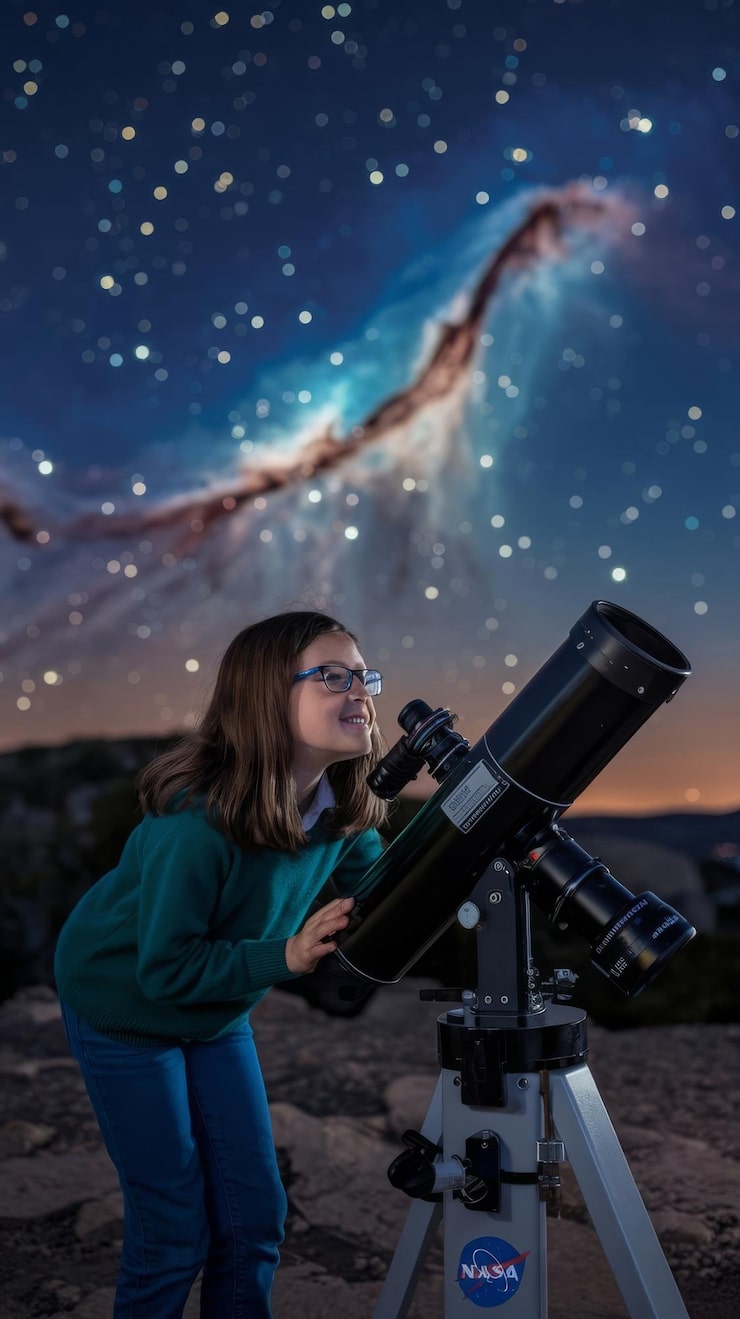
Human understanding of the universe begins with careful observation. observational astronomy focuses on collecting and analyzing light and other signals from celestial objects to uncover the nature of cosmic phenomena.
Foundations of Observational Astronomy
This field relies on telescopes operating across the electromagnetic spectrum. Optical, radio, infrared, and X-ray instruments each reveal different aspects of the universe.
By studying how objects emit or absorb radiation, astronomers infer composition, motion, and distance.

Tools and Techniques
Ground-based observatories provide high-resolution data, while space-based instruments avoid atmospheric interference. Together, they support a comprehensive view of cosmic activity.
Data processing plays a crucial role, transforming raw signals into meaningful measurements. Advances in sensors and computing continue to expand capabilities.
Scientific Contributions
Through observational astronomy, scientists have discovered exoplanets, mapped galaxies, and measured cosmic expansion. These observations shape theoretical models and challenge existing assumptions.
Long-term surveys also reveal changes over time, offering insight into stellar life cycles and galactic evolution.
Challenges in Observation
Light pollution, atmospheric distortion, and instrument limitations affect data quality. Astronomers address these issues through site selection, adaptive optics, and calibration methods.
As datasets grow larger, managing and interpreting information becomes increasingly complex.

Continuing Discovery
New observatories promise deeper and more precise views of the cosmos. As research progresses, observational astronomy remains essential to expanding humanity’s cosmic perspective.