In a world where digital evidence increasingly shapes investigations, two domains are converging to unlock new possibilities: forensic video enhancement and cloud forensics. When you can enhance critical video imagery and concurrently analyze cloud-based data, investigators gain a powerful synergy that transforms how crimes are solved, legal cases are built, and truth is revealed.
What Is Forensic Video Enhancement?
Definition & Purpose
Forensic video enhancement is the discipline of applying specialized processing techniques to surveillance or evidentiary video footage to improve its clarity, readability, and usefulness for investigations or court proceedings. The goal is not just cosmetic improvement but exposing latent details—faces, license plates, object contours—that might be obscured by noise, blur, low lighting, compression artifacts, or camera limitations.
Core Techniques & Challenges
Some standard image/video processing techniques used in forensic video enhancement include:
- Noise reduction / denoising — suppressing random noise (especially in low-light or compressed video)
- Deblurring / motion blur correction — undoing blur caused by camera or object motion, using techniques such as blind deconvolution or adaptive kernel estimation
- Super-resolution / frame fusion — combining information across multiple frames to reconstruct higher-resolution images (e.g. combining many low-res images into a sharper one)
- Contrast enhancement & histogram equalization — correcting lighting, shadows, and brightness imbalances
- Color correction / white balance — adjusting for color inaccuracies or tinting from ambient lighting
- Perspective correction / geometry correction — rectifying distortions due to camera angle or lens distortion
- Selective region enhancement / frame-adaptive processing — treating separate parts of a frame differently (e.g., foreground vs. background) to optimize results
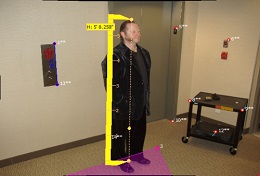
- 3D reconstruction / photogrammetry — in advanced systems, mapping video to 3D models, measuring physical distances, or overlaying video onto a 3D scene scan
However, real-world evidence footage often suffers from severe limitations: low frame rates, compression artifacts, multiple overlapping distortions, or missing frames. The challenge is applying enhancement in a scientifically valid, reproducible way that stands up to legal scrutiny.
Proven Tools: Cognitech’s Example
Cognitech (the reference you provided) offers advanced capabilities in forensic video enhancement. Their Video Investigator software is part of the TriSuite64 package and includes over 200 filters and proprietary algorithms (with 23 U.S. patents) tailored for forensic video and image tasks.
They support frame-adaptive processing (adjusting enhancement parameters within different regions of each frame) to accommodate complex degradations. They also provide FrameFusion®, a method to integrate information across frames to achieve higher clarity than single-frame approaches.
Cognitech’s cloud-enabled offering, My Cognitech Cloud (MC2), allows remote access to forensic video enhancement tools (deblurring, denoising, reconstruction, redaction, etc.) via browser or via AWS AppStream, enabling investigators to work from anywhere without heavy local hardware installation.
In sum, forensic video enhancement transforms raw, messy video into visual evidence that investigators can interpret, annotate, and present in court.
What Is Cloud Forensics?
Definition & Distinctive Scope
While forensic video enhancement deals specifically with images and video, cloud forensics is a branch of digital forensics that focuses on investigating events, breaches, or crimes that occur within cloud computing environments. It involves the identification, preservation, collection, analysis, and presentation of digital evidence stored in or passing through cloud systems.
Because data in the cloud is often distributed, replicated, and managed by third parties, cloud forensics presents unique challenges that differ from classic device-based forensics.
Key Challenges in Cloud Forensics
Some of the distinct hurdles in cloud forensics include:
- Data distribution & multi-tenancy
In cloud setups, multiple users’ data may co-exist on shared physical resources. Separating and attributing data to a specific user without compromising privacy of others is nontrivial. - Jurisdiction & legal boundaries
Cloud data may reside in servers across different countries. Investigators must navigate legal complexity, data ownership, and cross-border data access. - Evidence volatility
Cloud systems are dynamic—data can be moved, reconfigured, overwritten, or auto-deleted. Rapid evidence preservation is crucial. - Limited access & control over infrastructure
Investigators often rely on cooperation from cloud service providers (CSPs). Investigators may have only API-level access or log data, but not raw hardware access. - Logging variability and gaps
Not all cloud systems maintain comprehensive, tamper-proof logs. Some activity may go unlogged.
Workflow & Methodology
A typical cloud forensics lifecycle involves:
- Identification & scoping: Recognize that a cloud event must be investigated; map out relevant cloud assets and services.
- Preservation: Secure snapshots, logs, and read-only images to prevent alteration or data loss.
- Collection: Acquire data such as cloud logs, object storage, memory snapshots, API traces, VM images, metadata, etc.
- Examination & analysis: Parse logs, correlate event sequences, recover deleted data, trace identity, build timelines.
- Reporting & presentation: Document findings, preserve chain-of-custody, and present results in understandable formats for legal or managerial stakeholders.
In cloud forensics investigations, investigators often must combine data across multiple sources—user devices, cloud endpoints, network logs—to reconstruct the full picture.
How Forensic Video Enhancement & Cloud Forensics Intersect
These two domains—one focusing on video/image clarity, the other on cloud-based data investigation—may seem distinct, but their integration enables powerful new workflows. Here’s how they complement each other:
Cloud-Hosted Video Evidence
In many modern setups, surveillance systems or video recording systems stream or store footage directly to cloud storage (e.g. Amazon S3, Azure Blob, or vendor-managed video-as-a-service platforms). In such cases, video evidence is often inherently part of the cloud ecosystem. Cloud forensics becomes responsible for identifying, collecting, and preserving that video data, while forensic video enhancement takes up the task of processing the raw footage. Together, they create a seamless flow from data acquisition in the cloud to visual clarity and analysis.
Remote & Scalable Processing
Cloud-based forensic video enhancement platforms (like Cognitech’s MC2) allow investigators to upload, process, and enhance video without needing high-end local hardware. This offloads compute-intensive enhancement tasks (deblurring, frame fusion, 3D reconstruction) to cloud infrastructure. This fusion of cloud forensics (to manage, secure, and pipeline the data) and forensic video enhancement (to interpret the imagery) yields scalable, distributed workflows.
Metadata Correlation & Timeline Reconstruction
Video footage often comes bundled with timestamps, geolocation tags, or system metadata. Cloud forensics can access broader context—server-side logs, access logs, user session logs—that correlate with video events. For example:
- A cloud forensic log may show that a certain user authenticated at 10:05:12 UTC.
- Video footage timestamped 10:05:15 shows a person entering the premises.
Aligning these helps strengthen investigative narratives. Cloud forensics also helps validate that the video file was not tampered with (via hash logs, file integrity records, access audit logs), which is critical for chain-of-custody.
Distributed Evidence Aggregation
Within a modern enterprise or security operation, video streams may come from distributed locations, stored across different cloud buckets or regions. Cloud forensics enables investigators to collect those distributed assets into a unified forensic workspace. Then forensic video enhancement can be applied uniformly. This is especially important when multiple video feeds must be synchronized and cross-analyzed (e.g. multiple angles of an incident).
Validating Authenticity & Preventing Tampering
Cloud forensics techniques (such as digital signatures, timestamped logs, versioning, and hash chaining) can validate that a video file has not been altered since ingestion. This ensures that what the forensic video enhancement algorithm is operating on is a pristine copy. Without that guarantee, enhancements might mask or introduce artifacts. Thus, forensic video enhancement and cloud forensics must operate hand-in-hand to preserve evidentiary integrity.
Use Cases & Scenarios
Here are some illustrative case scenarios where the synergy of forensic video enhancement and cloud forensics proves essential:
1. Retail Theft in a Multi-Store Network
A theft is caught on camera in Store B, but CCTV logs show the video stream was already cloud-synced to a central server. The local image is fuzzy; the license plate isn’t clear.
- Cloud forensics is used to retrieve the stored video from secure cloud storage and trace versions, file logs, and metadata.
- The video is run through forensic video enhancement tools (frame fusion, deblurring) to clarify the license plate.
- Correlate with access logs in the cloud (e.g., timestamps, user logins) to identify which shift or staff member might have been active near that time.
2. Remote Crime Scene Investigation
Investigators in one jurisdiction need to process video taken in another country and stored on a cloud service.
- Cloud forensics helps negotiate access with the cloud provider, maintain legal compliance, and preserve logs for chain-of-custody.
- Enhanced video helps improve vital details (face recognition, motion paths) that are admissible in court across jurisdictions.
3. Insider Data Exfiltration & Cam-Watch Monitoring
An insider is suspected of stealing data while wearing a body-worn camera whose footage streams to the cloud.
- Cloud forensics tracks who accessed the footage, when, and whether any segments were altered or deleted.
- Forensic video enhancement improves low-light or compressed frames to identify the insider’s actions or surroundings.
These real-world cases underscore the practical need for combining image/video enhancement with cloud-centric forensic processes.
Best Practices & Considerations
To ensure that your investigative workflows remain robust, valid, and legally defensible, keep these best practices in mind:
- Maintain strict chain-of-custody — Every step from acquisition to enhancement must be logged, with hash validation and audit trails.
- Document enhancement parameters — For each video file, record which filters, settings, and steps were applied so results can be repeated or challenged.
- Work from pristine copies — Always retain original, unprocessed video copies. Only enhance on duplicates.
- Synchronize time references — Ensure that timestamps used in video, logs, and metadata are aligned properly.
- Validate CSP cooperation — In cloud environments, ensure you have documented service provider support, clear SLAs, and legal authority to access logs and data.
- Secure data in transit & at rest — Use encryption, access controls, and secure transfer protocols during upload/download.
- Use authenticated enhancement tools — Prefer software designed for forensic use (with audit logs and reproducibility), such as Cognitech’s Video Investigator with patented and peer-reviewed algorithms.
- Stay updated on jurisdictional laws — Cloud forensics crosses borders; remain aware of privacy, data sovereignty, and evidence laws in all relevant jurisdictions.
Trends & Future Directions
AI, Automation & Hybrid Tools
Recent academic work (e.g. Cloud Investigation Automation Framework (CIAF)) explores using large language models (LLMs) and semantic validation to partially automate cloud log analysis in forensic workflows, improving efficiency and reducing human error. arXiv As these tools mature, we may see more integration between video enhancement pipelines and AI-driven cloud log correlation engines.
Edge-to-Cloud Video Forensics
IoT and edge devices are generating real-time video streams that sync directly to cloud. The next frontier is doing partial enhancement at edge (on-device) before cloud upload, reducing network costs and enabling live forensic insights.
Standardization & Interoperability
As cloud forensics becomes mature, standards for log formats, chain-of-custody metadata, and interoperable forensic workflows will emerge. This will simplify integration between enhancement tools and forensic platforms.
Enhanced 3D & Virtual Reality Reconstruction
Future forensic systems will better fuse video with 3D environment scans, LIDAR data, and AR/VR models to allow virtual walkthroughs of crime scenes derived from real footage. Cognitech already supports some of this via photogrammetry and fusion tools.
Conclusion
The synergy of forensic video enhancement and cloud forensics offers a new paradigm in digital investigations. Video enhancement techniques convert low-quality footage into usable, insight-rich images. Cloud forensics ensures those video assets and associated metadata are collected, preserved, validated, and correlated within broader digital evidence contexts.
As video systems increasingly upload or stream content into cloud infrastructure, the boundary between the two disciplines blurs. Through combined workflows, investigators are empowered to work remotely, at scale, and across jurisdictions—with both image clarity and evidentiary integrity. For law enforcement, legal teams, corporate security, or digital forensic practitioners, understanding and leveraging the integration of these fields will become ever more essential.